This project includes four complementary elements that will significantly improve the resilience and preparedness of the NSW oyster industry for future natural disasters through:
1. Development & extension of a disaster preparedness handbook
Following the catalogue of disasters endured by the NSW oyster industry in recent years (including bushfires, floods, heatwaves, oil spills and disease outbreaks), NSW Farmers identified the need to develop a handbook to help the industry to prepare for future catastrophic events.
Twenty-two interviews (over 16hrs of recordings) were conducted with farmers who endured these disasters, and their experiences and learnings distilled into the pages of a handbook. Oral accounts were combined with generic disaster preparedness advice, to create a resource contextualised for the NSW oyster industry.
Following development of the handbook, eight workshops were delivered across the state in May 2024, providing the opportunity to extend the handbooks and discuss some of the key learnings and recommendations. Water quality monitoring equipment and oil spills kits were also purchased and distributed to numerous oyster-producing estuaries.

A digital version of the handbook can be downloaded here.
2. Emergency oyster relay areas
This component of the project collaborated with NSW DPIRD and local growers in two estuaries to further develop the concept of Emergency Oyster Relay Areas - designated safe havens where oysters can be temporarily relocated to improve their rates of survival. These relay areas function similarly to ‘Animal Safe Places’ established on land for livestock during emergencies. Meetings with oyster farmers in Wonboyn Lake and Hawkesbury River have provided useful insights into the practicalities of using these areas relating to: the installation of temporary signage, equitable use, equipment identification and ownership, insurance considerations, permitted gear types, activation triggers, and site decommissioning.
NSW DPIRD have been investigating appropriate approvals and have started drafting Development Applications (DA’s) for both estuaries. Recognising that completing this process will take time, NSW Farmers and NSW DPIRD have ensured that a commitment to advancing Emergency Oyster Relay Areas has been included in the 2030 NSW Aquaculture Vision Statement and Roadmap.
3. Marketing campaign
Since the Black Summer Bushfires, efforts to promote NSW oysters have expanded, and this initiative further strengthened industry visibility through the development of new marketing materials:
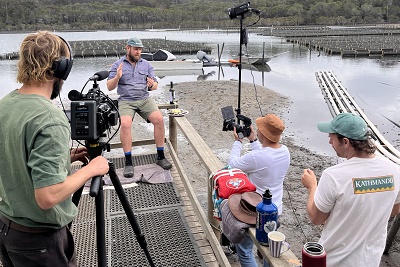
Twelve community-facing educational video (viewable here), alongside nutritional brochures, oyster calendars, fridge magnets, tote bags, and an information banner. These resources were strategically distributed to seafood retailers in urban centres and across coastal NSW, ensuring broad consumer reach. Oyster opening demonstrations and oyster information tents were also organised at seafood festivals to further disseminate information and help demystify the industry. The full suite of promotional materials can be viewed here.
4. Establishing industry’s baseline carbon emissions
Carbon neutrality continues to gain momentum in seafood markets and investment circles. While oyster farming has long been considered a low greenhouse gas footprint food, until now, no comprehensive carbon audit had been conducted at the sector-wide level.
This project initially supported thirty-one farm audits. Working closely with BlueShift Consulting, this data was analysed, and participating farms were provided with individual farm reports detailing their emissions profile, and options to reduce their carbon footprint.
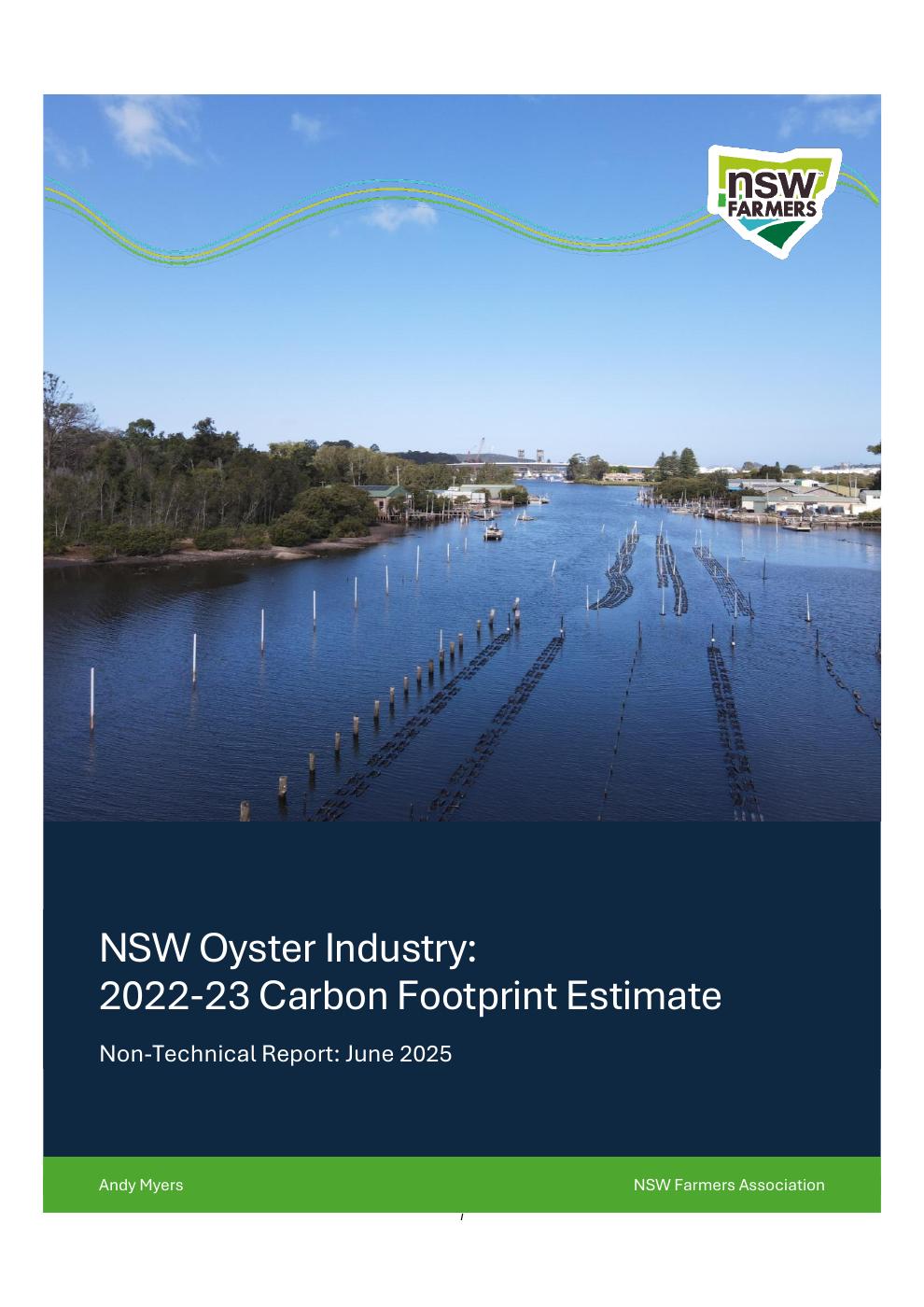
Consolidated emissions data was extrapolated to estimate statewide totals, forming the basis of a comprehensive carbon report for the industry. Designed for growers, the document is non-technical and outlines the fundamentals of carbon assessments and certification, while providing a roadmap to help the industry reduce greenhouse gas emissions. It also highlights the role of oysters in enhancing estuarine water quality through nutrient removal and explores opportunities for farmers to receive ecosystem service payments for delivering these environmental benefits.
Key findings from the assessment:
• Total emissions (22/23) = 2,640 t CO2e
• Carbon intensity = 0.93 kg CO2e / kg product
• Cost to offset ~$100,000 industry wide, or 1.5c / dz oysters.
The Statewide Report can be downloaded here.
For questions, please contact:
Andy Myers
0488 656 366 | [email protected]
Funding acknowledgment:
The Storm & Flood Industry Recovery Program is jointly funded by the Australian and the NSW Governments under the Disaster Recovery Funding Arrangements.